AI-Enabled Solutions for Modern Government

Turning AI Into Mission Capabilities

As AI reshapes how people interact with information and digital systems, federal agencies need practical, secure ways to apply these capabilities within complex operational environments. OPT-AI, OPTiMO’s turnkey AI framework and expertise, helps organizations modernize responsibly while improving efficiency, decision-making, and mission performance.

Technically Speaking: Advancing Customer Experience with Integrated Usability Testing.

As the pace of digital transformation in the federal government accelerates, limited changes to systems won’t be sufficient. Agencies must also enhance the customer experience.

This is why business analysts today need to do more than just document or translate requirements. At OPTiMO, we believe that effective business analysis drives meaningful customer experience with world-class accessibility while strengthening mission impact.

Our human-centered business analysis methodology combined with focused usability testing allows our teams to deliver solutions that are functional, compliant, intuitive, and trusted by users.

Business Analysis as a Key Driver for Customer Experience

Like Human-Centered Design (HCD), human-centered business analysis is grounded in a core principle: that people must stay at the center of the problem.

This approach is important in the federal space, where the 21st Century Integrated Digital Experience Act (21st Century IDEA) and OMB’s Customer Experience goals set the stage for customer-focused service delivery. These initiatives show a government-wide commitment to providing modern, accessible, and consistent digital experiences.

As government agencies attempt to minimize user pain points and increase trust and access to services, business analysis efforts can help turn policy into practical improvements.

Projects connected to these priorities need more than just functional and technical documentation. They need a clear understanding of user needs, measurable outcomes, and design choices grounded in reality.
At OPTiMO, our analysts are dedicated to this goal. They advocate for users and promote these practices by using methods such as:
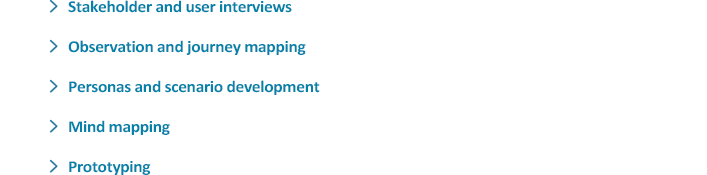
These human-centered business analysis techniques help teams make rational, user-friendly, and compliant decisions.

Embedding Usability Testing into Business Analysis

One powerful way analysts at OPTiMO help boost human-centered business analysis is through focused usability testing.

We incorporate usability testing in every phase of a project to gather direct and actionable feedback from real users. Instead of relying on assumptions, this type of testing allows teams to observe how people interact with a product or service.

Getting users involved early and often helps uncover insights that lead to meaningful improvements in:

Usability testing also strengthens stakeholder alignment by providing evidence to support design choices. It helps teams spot potential issues early, preventing costly problems later in development.

Creating Tests with Purpose

Effective usability testing starts with a clear goal.

Every test our analysts create starts by focusing on a specific question, like:
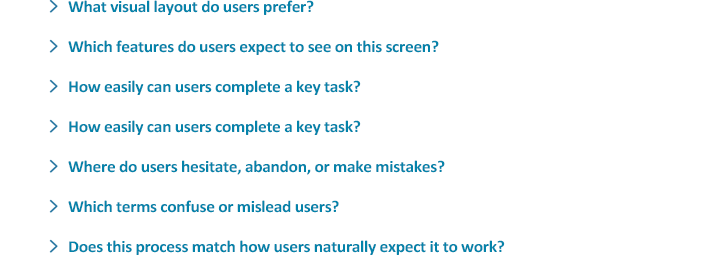
Focusing on a clear testing purpose helps ensure we move beyond personal opinions and gather solid evidence about what works and what doesn’t. It also helps clearly define the type of test needed because different usability tests answer different questions. For example:

With clarity of purpose, we can design the test to gather the right kind of feedback and evidence.

This helps us understand not just if something is usable, but also why certain elements succeed or fail so that we can smartly guide refinements.

From Personas to Participants: Ensuring Relevant Feedback

Even the best usability test won’t yield meaningful results without the right participants.

Feedback is most valuable when it comes from people who represent the intended user group. These users provide the context, expectations, and real-world needs that shape how a solution will be used.

Testing with non-representative participants can lead to misleading conclusions and overlooked risks. Surprisingly, testing with too many people can have unintended consequences as well. Most usability problems are discovered quickly. Research and practice show that after about 5-10 participants, the same issues begin to repeat. Adding more people then uncovers fewer new insights, so the additional effort often produces diminishing returns.

Business analysts are key to making sure usability testing captures perspectives from the right users.

They support this by:
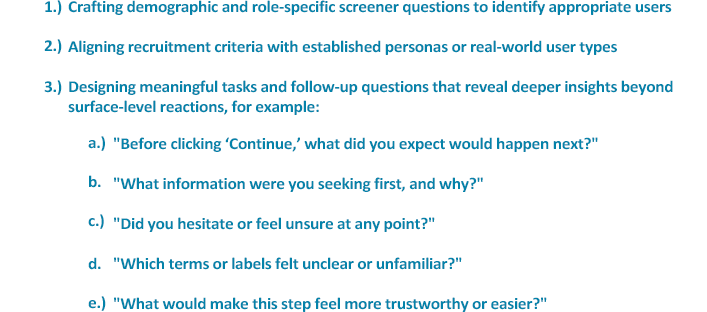
This approach helps teams understand user actions and the reasons behind any confusion or mistakes. It informs better requirements and design outcomes.

Harnessing AI for Smarter Testing

When usability testing is used in Agile delivery, teams need to be efficient.

At OPTiMO, we use usability testing platforms that improve both the speed and impact of testing efforts. These tools help teams:
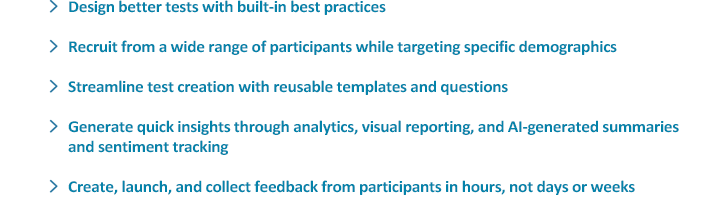
AI-supported analysis helps teams collect and summarize findings quickly, spot patterns, and communicate results effectively to stakeholders. Faster testing overall means quicker decisions and more user-centered outcomes.

Business Analysis, Quality Assurance and UX: A Collaborative Powerhouse

OPTiMO strengthens human-centered delivery through a collaborative approach to usability testing, enabling our experts in business analysis, quality assurance, UX research, and design to turn insights into coordinated action. Together, they create deliverables such as:
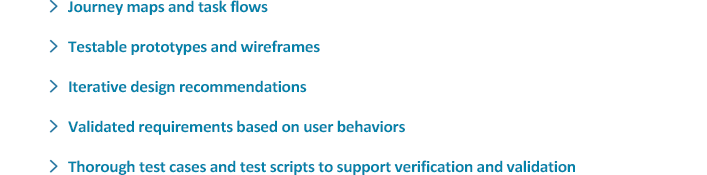
This cooperation ensures that usability findings don’t stay isolated; they drive real design changes and improvements in delivery.

Iterating with Purpose Across the Agile Lifecycle

Usability testing is most effective when it is seen as an ongoing practice, not just a one-time event.

OPTiMO integrates testing throughout the Agile lifecycle, including:

Testing early, regularly, and purposefully helps teams lower risk, boost adoption, and consistently enhance customer experience over time.

In Summary

OPTiMO’s approach to usability testing differentiates our delivery model from simple checkbox implementations.

By introducing usability testing early in project lifecycles, our teams move faster from concept to solution, ensuring outcomes meet real user needs.

This approach reinforces:

Ultimately, business analysis is not just about documenting what a system should do. It is about making sure what we build truly works for users.

At OPTiMO, we are committed to delivering transformative, data-driven, and user-focused solutions that help agencies advance their missions with clarity, trust, and impact.

Technically Speaking: Accelerating Federal Mobile App Delivery with Kotlin Multiplatform (KMP)

Meeting Federal Mobile Needs

Federal agencies face a growing demand for secure, reliable and user-friendly mobile applications. Getting there can be complex and challenging. Teams must balance speed, security, maintainability, and cost efficiency.

Enter: Kotlin Multiplatform (KMP)

That’s why, at OPTiMO, we adopt frameworks and tools that meet these needs, like Kotlin Multiplatform (KMP). As KMP gains momentum across industry, we have already embraced it as a strategic solution. After evaluating alternatives, we identified KMP as the most effective way to streamline mobile development, ensure compliance, and deliver high-quality mobile apps that meet the changing needs of federal clients.

What is KMP and Why it Matters

KMP is a framework and set of tools built into the Kotlin programming language ecosystem (created by JetBrains) that sits on top of native Software Development Kits (SDKs) and helps unify development across them. It enables developers to write the non-user interface (UI) portions of a mobile app’s code in Kotlin, which can then be compiled for both Android and iOS frameworks.

However, it is important to note that KMP allows code to be shared across multiple platforms (not just mobile), including iOS, Android, desktop, and server-side environments. The UI layer is built with native technologies (SwiftUI for iOS, Jetpack Compose for Android), ensuring each platform delivers the experience users expect. By maintaining a shared codebase for core functionality while preserving native UI, KMP allows for both efficiency in development and platform-specific design. This is especially valuable for federal clients looking to improve accessibility, compliance, and usability.

OPTiMO’s Approach with KMP

We decide what to share versus keep native, set up the project, build the shared stack, bridge cleanly to each platform, and support it with testing and CI/CD. Using this method, we seamlessly integrated KMP into our Agile delivery framework and quickly realized the advantages of a shared business logic layer. That layer reduced redundancy, ensured consistent performance, and streamlined updates. It also kept our Android and iOS applications aligned without duplicating effort and simplified testing, while still allowing users to benefit from platform-specific UI features and functionality. As a result, they experienced apps that felt fast, familiar, and fully native in their preferred environment.

KMP offers both Efficiency and Quality in Delivery

By reusing significant portions of code, federal agencies can accelerate development cycles while reducing maintenance costs by minimizing duplicated effort. This approach ensures parity across iOS and Android versions, simplifies the rollout of new features, and ultimately supports federal digital transformation goals and modernization mandates.

Building with KMP is like developing one and a half apps instead of two separate ones. You share the bulk of the core logic (e.g. – data models, business rules, networking, and security) across both iOS and Android, while only writing the platform-specific pieces, once for each system. OPTiMO’s unique approach cuts development effort by nearly half without losing the benefits of native performance and design.

Security and Compliance Advantages

KMP also strengthens testing and compliance documentation, ensuring consistent standards across applications. For federal clients, this translates into reduced risk and fewer security vulnerabilities stemming from duplicate codebases.

Federal Client Success

OPTiMO recently showcased the impact of Kotlin Multiplatform (KMP) in delivering a modern mobile app for a federal agency. By using a shared codebase for business logic and data handling across Android and iOS, the team streamlined development while maintaining native UI experiences through SwiftUI and Jetpack Compose.

Our unique implementation of this led to a reduction in delivery time, simplified maintenance through centralized updates. The app met federal compliance standards like FedRAMP and Section 508, and was built for scalability, security, and offline resilience.

Example Mobile Architecture Explained

Presentation logic is platform-specific:

  • iOS (SwiftUI/AppKit/MVC) and
  • Android (Jetpack Compose/MVC)

SKIE (Swift-Kotlin Interop Engine) sits between iOS and the shared module, bridging Swift to Kotlin so iOS can use the shared Kotlin code like native Swift code. While optional in KMP, SKIE simplifies working with Kotlin features like Flows, making integration with Swift more natural.

Business logic is shared in KMP, organized into layers:

  • Authentication (OAuth 2.0 / OIDC)
  • Hub Web Services (Ktor HTTP client)
  • Utilities (Koin DI, Kotlin coroutines)
  • Cache (SQLDelight/SQLCipher)
  • Settings are platform-specific: Device Keychain on iOS, Android Keystore on Android.

OPTiMO’s use of KMP demonstrates how modern frameworks, paired with Agile delivery and federal expertise, can accelerate innovation and improve outcomes in government technology.

OPTiMO + KMP for Future-Ready Mobile

OPTiMO’s use of KMP reflects its deep commitment to innovation and operational efficiency, helping federal clients modernize services while maintaining compliance and scalability. By embracing KMP, OPTiMO empowers agencies to build mobile solutions that are not only faster and smarter, but also more sustainable for long-term success.

Enabling Excellence with QA & Testing Expertise

QA & Testing Expertise that Delivers Quality You Can Trust at Any Scale

To effectively support agencies’ missions and drive new efficiencies, modernization programs depend on fast delivery and reliable, cost-effective performance. OPTiMO elevates exceptional quality above all else so that, regardless of whether it’s serving hundreds or millions, every solution we deliver achieves those requirements and more.

Our team of Quality Assurance (QA) experts help bring that commitment to life, ensuring every release is secure, compliant, scalable, and ready for audit. They achieve this through our proven, rigorous QA processes, all designed to meet the highest standards for performance, reliability, and user satisfaction.

OPTiMO integrates QA directly into Agile delivery, so testing and assurance run continuously throughout the lifecycle. This approach helps us surface and resolve issues early, reduce the cost of fixing defects, and manage delivery on time, within scope, and to specification. It also reflects strengths customers rely on across federal environments: proven past performance with mission programs, deep Agile expertise, and efficiency-driven automated workflows, as well as security and compliance discipline – especially Section 508.

Our proven approach includes:

  • A comprehensive testing strategy across unit, integration, system, and user acceptance testing to validate components and full solutions.
  • Traceability by design, with test cases and scripts built from customer requirements and linked in a Requirements Traceability Matrix (RTM).
  • Automation that safeguards change, using tools such as Selenium and JUnit for efficient, repeatable checks and reliable regression coverage as solutions evolve.
  • Ongoing accessibility verification throughout the process, including Section 508 conformance methods and usability testing, so solutions remain accessible, compliant, and user-friendly.
  • Performance, load, and security testing are incorporated into delivery pipelines to validate stability, scalability, and protection under real-world conditions.

These practices support programs that must cost-effectively scale, adapt quickly, and meet federal requirements. OPTiMO’s experienced engineering, testing, and program management teams bring decades of federal delivery, CI/CD fluency, and cloud proficiency across platforms such as AWS and Microsoft Azure. Customers gain faster feedback, steadier releases, and audit-ready evidence without slowing delivery.

How We Embed Quality Into Every Step

OPTiMO’s QA and testing processes follow a structured, methodical approach that supports each step of the solution lifecycle with robust practices and clear accountability.

  • Engage and define: We collaborate with the customer to capture requirements and define clear acceptance criteria. These criteria form the foundation of the testing strategy and keep everyone aligned on what success looks like.
  • Map and trace: We translate requirements into detailed test cases and scripts, then maintain an RTM that ties each requirement to specific tests. RTM updates occur continuously with sprint activities to preserve alignment as requirements evolve, ensuring full coverage from concept to delivery.
  • Test, verify, and validate inside every sprint: QA and engineering experts execute unit tests as components are developed, identifying and resolving defects at the earliest opportunity. We follow with integration testing to verify that components work together as intended, using both manual and automated cases to validate functional and non-functional behavior. Automation frameworks and industry-standard tools such as Selenium, JUnit, or Azure DevOps streamline this work, supporting regression, API, and end-to-end testing to improve repeatability and coverage.

Why Cross-Team Alignment Matters
Quality improves when teams collaborate closely. OPTiMO’s QA and testing team partners with development and customer teams to keep information flowing and decisions moving.

  • Shared acceptance criteria keep stories testable and measurable.
  • Peer reviews and integrated defect tracking document issues, clarify severity, and align priorities across the team.
  • Transparent CI/CD dashboards provide ongoing insight into progress and risk so stakeholders can act quickly and confidently.

That rhythm helps customers sustain momentum on large, mission-critical efforts – including programs that process high data volumes or serve large user bases – while preserving the assurance leaders need for governance and audit purposes.

Embedding Ongoing Verification, Validation, & Defect Management Verification and validation are central to maintaining alignment between technical quality and real-world needs.

OPTiMO treats verification and validation as continuous, cross-team activities that align real-world expectations with technical quality. Verification confirms the solution meets technical requirements; validation confirms it meets user needs under realistic, production-like conditions. We perform both throughout delivery and tie each activity to clear evidence.

  • Verification (built right): Peer reviews and targeted tests confirm functional and non-functional requirements. We maintain traceability from requirement and acceptance criteria to test cases and results, so reviewers can connect each claim to proof.
  • Validation (built the right thing): We exercise realistic end-to-end scenarios in environments that mirror production – data characteristics, integrations, and configurations – so results translate to operations. Usability, performance, and Section 508 accessibility checks are part of this routine.
  • Automated regression & CI/CD: Stable, high-value user paths are covered by automated regression tests. CI/CD pipelines (e.g., Azure DevOps, Jenkins, or GitLab) run these checks on commit and surface fast feedback to developers and stakeholders, improving cadence and reducing rework. Our CI/CD automation framework integrates with leading DevOps toolchains to align testing, compliance, and release governance, providing flexibility for each customer’s environment.
  • Defect management: We track and resolve issues through enterprise defect management systems such as Jira, Azure DevOps Boards, or ServiceNow prioritizing by severity and retesting fixes to verify closure. Each resolution links back to its originating requirement to maintain audit clarity and full traceability.
  • Evidence and indicators: Dashboards provide real-time visibility into test results and defect status. We track indicators such as defect detection efficiency and test coverage to verify each release meets quality objectives and to guide continuous improvement. Additional measures such as test execution rate, defect density, and requirement coverage help ensure traceability and continuous improvement across each release.

Result: Customers see fewer regressions, clearer release decisions, and predictable progress. Each increment improves the solution without compromising what already works.

Test Environments that Reflect the Real World
OPTiMO creates test environments that track closely to production. We align data characteristics, integration points, and relevant configurations so results hold up when the solution scales.  In system testing, we validate end-to-end behavior, exercise performance-critical scenarios, and confirm accessibility with Section 508 methods. Because these environments closely mirror production, customers can treat results as credible signals for approvals and release planning.

This discipline matters when programs scale or must meet strict operating windows. OPTiMO’s cloud experience across platforms such as AWS and Microsoft Azure, combined with CI/CD automation, helps teams keep releases manageable while sustaining quality and uptime expectations. Customers gain a steadier cadence, fewer escalations, and a clearer picture of overall risk.

QA Strengths That Fortify Solutions
Customers rely on OPTiMO’s QA and testing capabilities for our blend of rigor and practicality:

  • Agile proficiency that supports iterative development, continuous feedback, and rapid adaptation to changing requirements.
  • Automation at the right level streamlines QA, reduces manual effort, and improves accuracy and consistency.
  • Compliance-driven processes that treat Section 508 as standard practice and maintain conformance evidence for review.
  • Experienced engineering, QA, and program teams with decades in federal environments who deliver secure, scalable, compliant solutions.
  • Proven past performance advancing mission programs and meeting expectations across complex federal portfolios.

These strengths align directly to customer outcomes: predictable releases, easier approvals, and solutions that maintain performance under real-world load.

Quality That Builds Trust and Advances the Mission
Quality should do more than check a box – it should build trust. OPTiMO’s QA and testing approach gives customers confidence that each increment improves the solution while protecting what already works. Clear acceptance criteria, an RTM that links requirements to tests, and continuous validation keep the conversation focused on outcomes that are important to the mission. Section 508 conformance and usability checks ensure every release supports all users. Automation reduces rework and accelerates delivery, while CI/CD pipelines and dashboards keep risk visible in real time.

That clarity pays off for programs and stakeholders. Approvals move faster because evidence is ready and traceable. Releases arrive in steady, understandable increments, so teams plan around progress rather than disruptions. Environments mirror production, so results hold up when the solution scales. And experienced OPTiMO team members sustain the cadence federal missions need, adapting quickly, resolving issues promptly, and maintaining compliance throughout.

When programs demand reliable performance, clear governance, and solutions that can grow without sacrificing stability, OPTiMO’s QA and testing capabilities provide the assurance and predictability customers need. We integrate quality into everyday work, protect timelines with disciplined testing and defect management, and keep accessibility and compliance front and center. Our frameworks integrate seamlessly with clients’ preferred toolsets and environments, ensuring consistent assurance practices across any platform. The result is straightforward: high-performing, secure, and reliable solutions that meet or exceed expectations while advancing the mission with confidence.

Unlocking the Power of Agentic AI for Government Transformation with OPT-AI

Federal agencies today face growing demands to do more with less – modernizing operations, improving mission delivery, and delivering better results with fewer resources, all within increasingly complex digital environments. We frequently see these familiar hurdles.

OPT-AI is purpose-built to tackle these challenges. Our OPT-AI solutions empower agencies to accelerate their AI journey with a flexible, scalable foundation for innovation.

Accelerating Automation with Low-Code Solutions and AI

A proof-of-concept turned production-ready: How OPTiMO delivered a fully functional MOU tracker in days—and then made it smarter with AI

A federal agency approached OPTiMO with a need: to quickly stand up a digital workflow to manage Memoranda of Understanding (MOUs) and Interconnection Security Agreements (ISAs).

Mission-Focused Digital Modernization, Supercharged by Agentic AI

Federal agencies are under pressure to transform their technology rapidly — modernizing legacy infrastructure, adopting smarter, cost effective technology, and delivering more with less — all aligned with mission priorities.

At OPTiMO, we help clients rationalize their IT portfolios, and integrate commercial off the shelf (COTS) software, lowcode and AI solutions, to evolve what you have into what you need. OPTiMO drives smarter IT modernization that delivers:

OPTiMO Named 2025 Elev8 GovCon Honoree in Federal Technology Space

In the fast-paced and highly competitive world of Federal Government Contracting, standing out requires more than just delivering solutions—it demands a commitment to excellence, innovation, and a culture that inspires employees, partners, and clients alike. OPTiMO Information Technology is proud to be named a 2025 Elev8 GovCon Honoree by OrangeSlices.ai, a recognition that celebrates companies “doing it the right way” in this dynamic industry.

Standing tall among industry heavyweights

This distinction is more than an award; it’s a testament to OPTiMO’s dedication to fostering a workplace where talent thrives, partnerships flourish, and impactful solutions are delivered to government clients. Being selected as an Elev8 Honoree underscores our focus on key pillars like growing talent, exemplifying innovation, and maintaining strong, ethical partnerships—values that not only drive our success but also elevate the broader GovCon community.

Why the Elev8 GovCon recognition matters

Recognition like this matters because it reflects the trust and support of our employees and partners who nominated us, affirming that our efforts to go above and beyond resonate deeply. It’s a competitive edge that translates into stronger engagement, loyalty, and growth, positioning OPTiMO as a leader in a marketplace where excellence is the standard.

We’re honored to join an exceptional group of 2025 Elev8 GovCon Honorees, each setting a high bar for what it means to succeed with integrity and purpose. To learn more about this prestigious recognition and the companies driving positive change in GovCon, visit OrangeSlices.ai for the full story.

Automating Federal Budget Execution with Microsoft Power Platform

Our solution offers automated workflows and intuitive performance monitoring, helping budget execution teams stay on track and meet their goals

At OPTiMO, we are proud to support US federal agencies in their mission to deliver efficient, accountable, and effective government operations. Since 2008, we have been dedicated to providing innovative, scalable solutions that eliminate bottlenecks and empower organizations with real-time insights, and we have an in-depth understanding of the unique challenges federal program offices face when it comes to budget execution — from slow approval processes and inconsistent data quality to a lack of real-time performance visibility.

To address these challenges, we developed our Spend Plan Tool, a powerful, low-code solution built on Microsoft Power Platform and Azure. This tool streamlines and automates every step of the budget execution process, including budget creation, approval, reporting, and execution management. By standardizing these processes, our platform enhances data security, ensures compliance, and improves collaboration across teams. With centralized data management, stakeholders gain access to accurate, real-time performance insights, enabling faster and more informed decision-making.

In this video, we take you through the features and benefits of the Spend Plan Tool, demonstrating how it bridges critical gaps in the federal spend plan process. Our solution offers automated workflows and intuitive performance monitoring, helping budget execution teams stay on track and meet their goals. By leveraging Power Platform on Azure, we provide rapid prototyping, flexible customization, and seamless integration, maximizing the value of every dollar spent.

Why OPTiMO? Here is a close look at what makes OPTiMO unique

We approach challenges with curiosity and creativity, digging deeper to find innovative answers and building solutions that aren’t just effective — they’re elegant, scalable, and built to last

At OPTiMO, excellence isn’t just a goal — it’s our standard. We’re a team of smart, creative collaborators who are passionate about delivering IT solutions of exceptional quality. But what really sets us apart is our unwavering commitment to going above and beyond, ensuring every project we touch transforms our customers’ vision into a resounding success.

In an industry where others often prioritize their bottom line over quality, the results can fall short — solutions that lack scalability, user-friendliness, and long-term impact. But at OPTiMO, we do things differently. Our close-knit, diverse team of experts is empowered to deliver greatness. We approach challenges with curiosity and creativity, digging deeper to find innovative answers and building solutions that aren’t just effective — they’re elegant, scalable, and built to last.

Our customers recognize this difference. When asked why they choose OPTiMO, they use words like trust, leadership, innovation, and excellence. And it’s that trust — earned through our dedication to superior quality and our values-driven culture — that fuels our drive to keep exceeding expectations.

We invite you to take a closer look at what makes OPTiMO unique. This video captures our passion, our expertise, and our commitment to delivering greatness every step of the way.